10 best Later alternatives
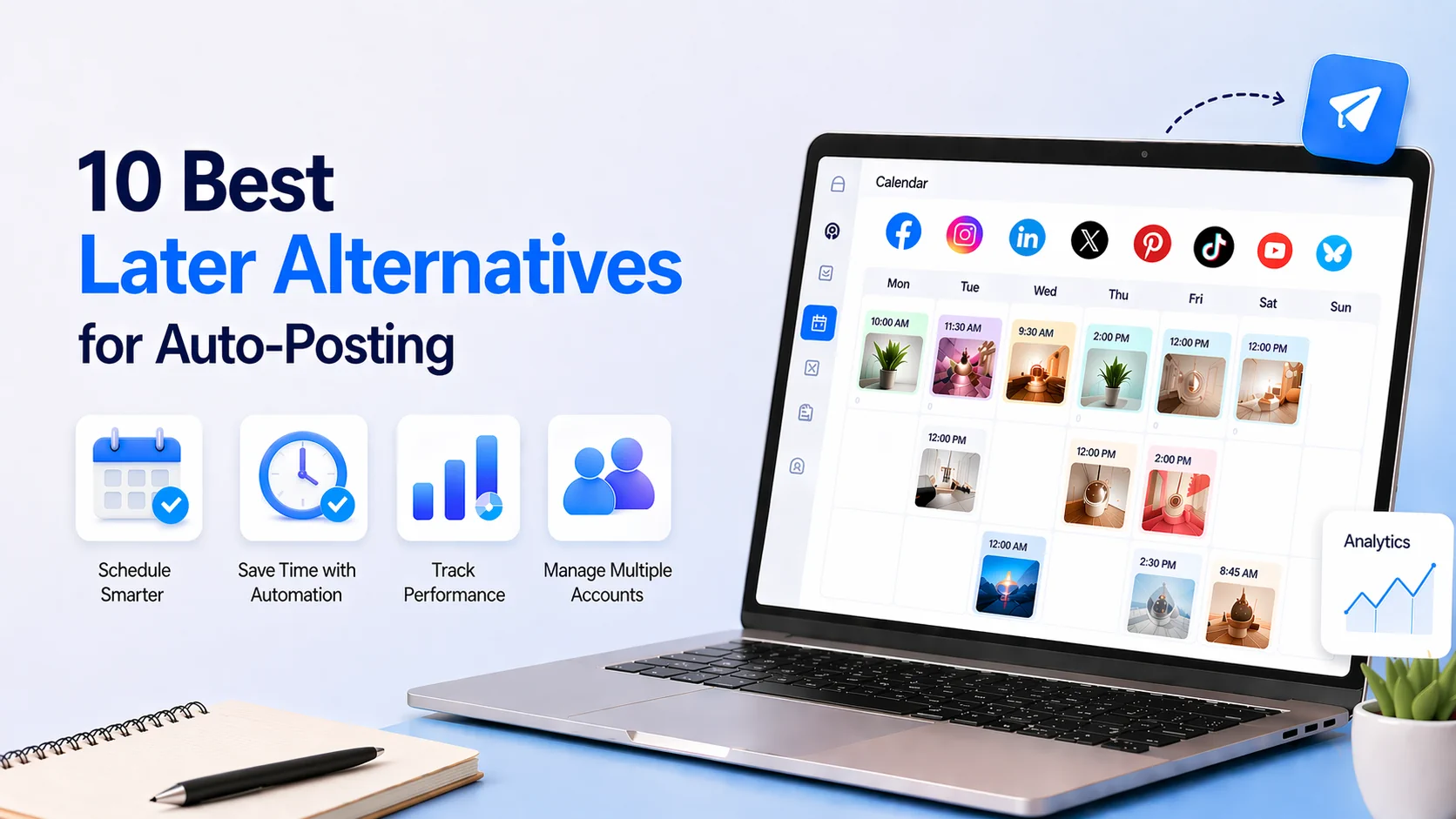
Later is a great platform for auto-posting and visual content planning. It is especially popular among creators, brands, and marketers who want a simple way to schedule content and keep their publishing calendar organized.
At the same time, some users may still look for solutions that feel more flexible, more feature-rich, easier to use, or simply more affordable.
The market for social media scheduling tools is genuinely impressive, and our editorial pick brings together top 10 platforms worth considering as strong alternatives to Later.
1. Postoria
Postoria is an all-in-one social media management platform built for simplicity, affordability, and real automation. It covers the full workflow: planning, scheduling, publishing, and managing multiple brands from a single interface.
Unlike Later, which focuses mainly on visual planning, Postoria is designed for structured content operations, including multi-workspace management, automations, and broader platform support.
Pros
- Generous free-forever plan with up to 10 social accounts and up to 50 posts per month
- Feature-rich paid plans at one of the lowest price points on the market
- Works across all major social media platforms
- Fast and responsive customer support
- Frequent updates and ongoing improvements
Cons
- Newer product on the market
- Some features may vary depending on what each social network’s official API supports
2. Buffer
Buffer is one of the most recognized social media scheduling tools and is often chosen for its simplicity. It provides a clean publishing flow, making it easy to schedule and manage posts without a steep learning curve.
It works well for individuals and small teams who want a reliable scheduling tool without advanced complexity.
Pros
- Very easy to use
- Clean and intuitive interface
- Free plan available
- Good for basic workflows
Cons
- Limited automation features
- Basic analytics
- Not ideal for complex team setups
3. Hootsuite
Hootsuite is one of the oldest platforms in the social media management space and is built for large-scale operations. It combines scheduling, monitoring, analytics, and social listening into a single platform.
Compared to Later, Hootsuite is far more complex and powerful, making it better suited for enterprises rather than small teams or creators.
Pros
- Advanced analytics and monitoring
- Strong team collaboration features
- Wide integrations ecosystem
- Enterprise-ready platform
Cons
- Expensive
- Complex interface
- May be excessive for small-scale use
4. Sprout Social
Sprout Social is a premium social media management platform known for its strong analytics and reporting capabilities. It is often used by teams that rely heavily on data to guide their content strategies.
While Later focuses more on content planning, Sprout Social offers deeper insights and more advanced tools for performance tracking and team workflows.
Pros
- Industry-leading analytics
- Strong reporting tools
- Unified inbox
- Scales well for teams
Cons
- Very expensive
- Not beginner-friendly
- Pricing increases with team size
5. SocialBee
SocialBee is known for its approach to evergreen content through category-based posting. It allows users to organize content into different buckets and recycle posts automatically.
This makes it a strong alternative to Later for users who want more automation and long-term content reuse rather than just visual planning.
Pros
- Strong automation system
- Content recycling features
- Good for evergreen strategies
- Mid-range pricing
Cons
- Interface feels dated
- Limited visual planning tools
- Basic analytics
6. Agorapulse
Agorapulse is a well-rounded social media management tool that focuses mainly on engagement and inbox management. It is especially useful for teams that handle large volumes of comments and messages.
Compared to Later, Agorapulse is more business-oriented, offering CRM-style features and structured workflows for managing audience interactions.
Pros
- Unified inbox
- Good reporting tools
- CRM-like user tracking
- Strong team collaboration
Cons
- Higher pricing
- Less focus on content creation
- Limited automation depth
7. Metricool
Metricool combines scheduling with analytics and ad tracking, making it a good choice for users who want to monitor both organic and paid performance.
It provides a balance between publishing and data insights, which makes it more versatile than Later for performance-focused workflows.
Pros
- Strong analytics dashboard
- Ad tracking support
- Free plan available
- Good value
Cons
- Interface can feel cluttered
- Learning curve for beginners
- Limited automation features
8. Planoly
Planoly is one of the closest alternatives to Later, focusing on visual content planning and Instagram workflows. It is popular among creators who want to maintain a consistent aesthetic feed.
Its visual-first experience, ease of use, and strong fit for Instagram-focused content make it a compelling alternative to Later for creators and brands that prioritize aesthetics.
Pros
- Strong visual planning tools
- Simple and attractive interface
- Good for creators
Cons
- Limited platform support
- Basic analytics
- Not ideal for agencies
9. Publer
Publer is a cost-effective social media scheduler that offers a wide range of features at a relatively low price. It supports multiple platforms and includes tools like bulk scheduling and link tracking.
It is a good alternative to Later for users who want more flexibility without paying premium prices.
Pros
- Affordable plans
- Good feature set
- Multi-platform support
Cons
- UI is less polished
- Limited advanced analytics
- Smaller ecosystem
10. Zoho Social
Zoho Social is part of the broader Zoho ecosystem and works best for businesses already using Zoho products. It integrates well with Zoho CRM and other tools in the suite.
Its seamless Zoho integrations and business-focused workflow make it a good alternative to Later for companies that want a more structured approach to social media management.
Pros
- Affordable pricing
- Strong Zoho integrations
- Good for small businesses
- Multiple plan tiers
Cons
- The interface may feel confusing for beginners
- Limited value outside the Zoho ecosystem
- Less feature-rich than top competitors
Final thoughts
Later remains a solid platform for visual content planning, but it is not the most flexible solution on the market. Many of today’s alternatives deliver stronger automation, broader platform support, more affordable pricing, and more scalable workflows for teams.
If you are starting to outgrow Later, switching to a different tool can make your content operations more efficient and easier to scale. And if you want the best balance between price, features, and ease of use, Postoria is the most practical choice, especially for growing teams and agencies.