YouTube remarketing from Shorts audiences: from views to subscriptions and purchases
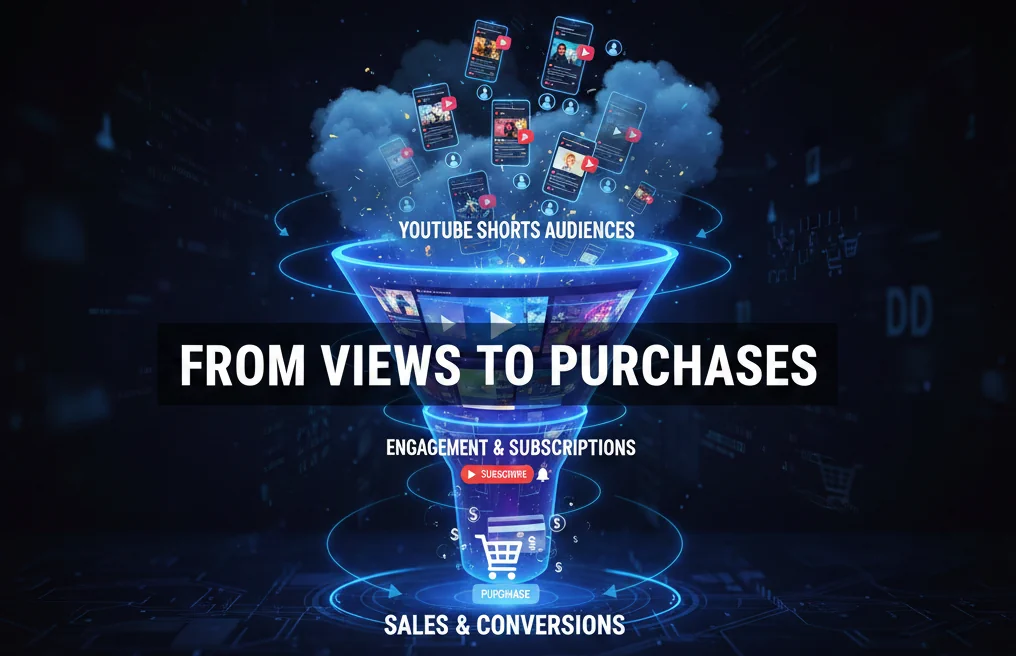
YouTube Shorts can introduce your brand to people who were not searching for you yet. That is valuable, but a Shorts view by itself is not a strategy.
The real opportunity comes after the first view. Someone watches a Short, then sees a clearer explanation, then subscribes, visits a product page, joins a list, or comes back later when the need is stronger. That path is where remarketing can help.
This guide explains how to think about YouTube remarketing from Shorts audiences without treating every viewer as equally ready to buy.
What YouTube remarketing actually uses
In Google Ads, YouTube audience segments can be built from interactions with your YouTube channel or videos after your YouTube channel and Google Ads account are linked. Google’s help documentation explains that audience segments can include actions such as viewing videos, subscribing to a channel, visiting a channel homepage, liking videos, or adding videos to playlists. It also notes eligibility requirements, including personalized ads settings, policy compliance, and minimum list size rules. You can review the official setup details in Google Ads Help.
For marketers, the important point is simple: remarketing works best when you define the viewer’s intent before you decide what to show next.
A person who watched three seconds of a funny Short is not the same as someone who watched several product tutorials, visited the channel page, and subscribed. Your follow-up should reflect that difference.
Why Shorts audiences need careful segmentation
Shorts are built for fast discovery. They can reach casual viewers, loyal fans, and future buyers in the same feed. That makes raw view count a weak buying signal.
A smarter remarketing plan separates viewers by depth of interest.
Think in four levels:
- Light viewers: saw one or more Shorts but gave no clear follow-up signal.
- Engaged viewers: watched multiple related Shorts or interacted with the channel.
- Consideration viewers: watched longer educational videos, demos, comparisons, or FAQs.
- High-intent viewers: visited your site, joined a list, started checkout, requested information, or watched purchase-related content.
The goal is to move people one level at a time. Do not send every Shorts viewer straight to a hard sales ad.
The Shorts remarketing ladder
Use this ladder to connect audience behavior to the next best content.
| Audience signal | What it may mean | Best next message | Example creative |
|---|---|---|---|
| Watched one broad Short | Mild curiosity | More helpful Shorts or a simple problem explainer | ”3 mistakes people make when choosing a home office light” |
| Watched several Shorts on one topic | Topic interest | Longer explanation or comparison | ”How to choose a desk lamp for video calls” |
| Subscribed or visited the channel | Brand interest | Trust-building series or product education | ”Behind the design: why we built it this way” |
| Watched a demo, review, or FAQ | Consideration | Offer, trial, consultation, or product page | ”See the full setup and compare options” |
| Visited the website or cart | High intent | Reminder, objection handling, or limited offer | ”Still comparing? Here is the sizing guide” |
This sequence protects the viewer experience. It also gives your creative team a clear job for every ad and organic post.
Build content sequences before you build ads
A weak remarketing campaign often has only two pieces: a viral Short and a sales ad. That jump is too large for many buyers.
Build a sequence instead.
Sequence 1: Education first
Best for SaaS, services, expert brands, and higher-consideration products.
- Short 1: Name the problem.
- Short 2: Explain why the problem happens.
- Long video: Show the full solution or workflow.
- Remarketing ad: Invite viewers to try the product, book a call, or download a practical resource.
Sequence 2: Product proof
Best for e-commerce and visual products.
- Short 1: Demonstrate the product in a real situation.
- Short 2: Answer the most common objection.
- Long video or landing page: Show comparison, sizing, setup, or use cases.
- Remarketing ad: Send viewers to the most relevant product page or offer.
Sequence 3: Creator or founder trust
Best for creator-led brands, founder-led companies, and personal brands.
- Short 1: Personal story or point of view.
- Short 2: Lesson, mistake, or behind-the-scenes context.
- Long video: Deeper explanation or case study.
- Remarketing ad: Promote a newsletter, course, product, or consultation.
The important part is continuity. The viewer should feel like the next message is a helpful continuation, not a random interruption.
Example: e-commerce Shorts remarketing flow
Imagine an online store selling compact travel bags.
A simple funnel could look like this:
- Top Short: “Three ways people overpack for a weekend trip.”
- Follow-up Short: “What actually needs its own pocket in a carry-on bag.”
- Longer video: “How to pack for two nights with one personal item.”
- Remarketing ad for engaged viewers: “See the weekend bag layout and compare sizes.”
- Remarketing ad for site visitors: “Still deciding? Watch the 60-second packing demo.”
This works because the ads do not start with “buy now.” They continue the problem-solving thread that attracted the viewer in the first place.
Example: B2B or SaaS Shorts remarketing flow
For a software company, the path may be less visual but more educational.
- Top Short: “Why your content calendar still feels chaotic.”
- Follow-up Short: “The difference between a calendar and a workflow.”
- Longer video: “How a small marketing team plans one month of content.”
- Remarketing ad for engaged viewers: “Try the workflow template.”
- Remarketing ad for site visitors: “See how the calendar works in the product.”
For social media teams, Postoria can support the organic side of this process by helping schedule Shorts, reminders, and related posts across supported platforms. If you are building a broader video system, the guide to YouTube Shorts series and playlists can help you plan content that builds repeat viewing.
What to exclude from remarketing
Good remarketing is as much about exclusions as targeting.
Consider excluding or separating:
- Existing customers who already purchased the promoted product
- Very recent converters who need onboarding, not another sales ad
- Viewers who only watched unrelated entertainment Shorts
- Audiences that are too small to evaluate reliably
- Segments that are policy-sensitive or not eligible for personalized ads
Exclusions keep your campaigns cleaner and your message less annoying.
Creative rules for Shorts-based remarketing
Remarketing creative should feel familiar without repeating the same Short.
Use these rules:
- Repeat the core idea, not the exact same opening.
- Acknowledge the viewer’s likely stage.
- Move one step deeper than the original Short.
- Keep the CTA appropriate to intent.
- Use vertical video when the audience came from Shorts.
- Match the landing page to the exact promise in the ad.
Weak remarketing message:
“Buy our product today.”
Better message after a comparison Short:
“Still comparing options? This 2-minute demo shows the difference between the compact and full-size versions.”
The second message respects the viewer’s context.
Track the right outcomes
Do not judge Shorts remarketing only by immediate purchases. Different stages need different measures.
Top and mid-funnel metrics:
- View rate
- Watch time
- Channel visits
- Subscriptions
- Long-form video views
- Returning viewers
Consideration metrics:
- Landing page visits
- Product page engagement
- Email signups
- Demo clicks
- Add-to-cart actions
Conversion metrics:
- Purchases
- Leads
- Trial starts
- Cost per acquisition
- Revenue where attribution is reliable
For social publishing, pair ad data with content performance. The article on YouTube SEO for brands can help you strengthen the organic search side while remarketing handles follow-up.
How Postoria fits a YouTube remarketing workflow
Postoria is not a Google Ads manager, but it can help your team keep the content side organized.
Use Postoria to:
- Plan Shorts, long-form video promos, and cross-platform posts in a visual calendar
- Schedule supporting posts on LinkedIn, Instagram, Facebook, X, Threads, Pinterest, Bluesky, Tumblr, Telegram, and Google Business Profile where relevant
- Keep media assets organized for campaign reuse
- Coordinate posting groups and workspaces for different brands or clients
- Review social performance so the next Shorts batch is based on real content signals
A remarketing campaign is stronger when the organic content system behind it is consistent.
Conclusion
YouTube Shorts remarketing works best when it is treated as a sequence, not a shortcut. A Shorts view is a starting signal. Your job is to understand how interested that viewer seems, then show the next piece of content that makes sense.
Segment audiences by intent. Move viewers from Shorts to deeper education, proof, and offers. Exclude people who should not see the message. Track the stage-appropriate metrics.
When your Shorts, long-form content, landing pages, and remarketing ads work together, YouTube becomes more than a reach channel. It becomes a path from attention to trust to action.